Obstacle avoidance: robotics project brief
Identify the sensor and connector supported by your actual board. Test stationary readings and a conservative stop decision before planning any moving obstacle-avoidance demonstration.
By CYOBot · Updated
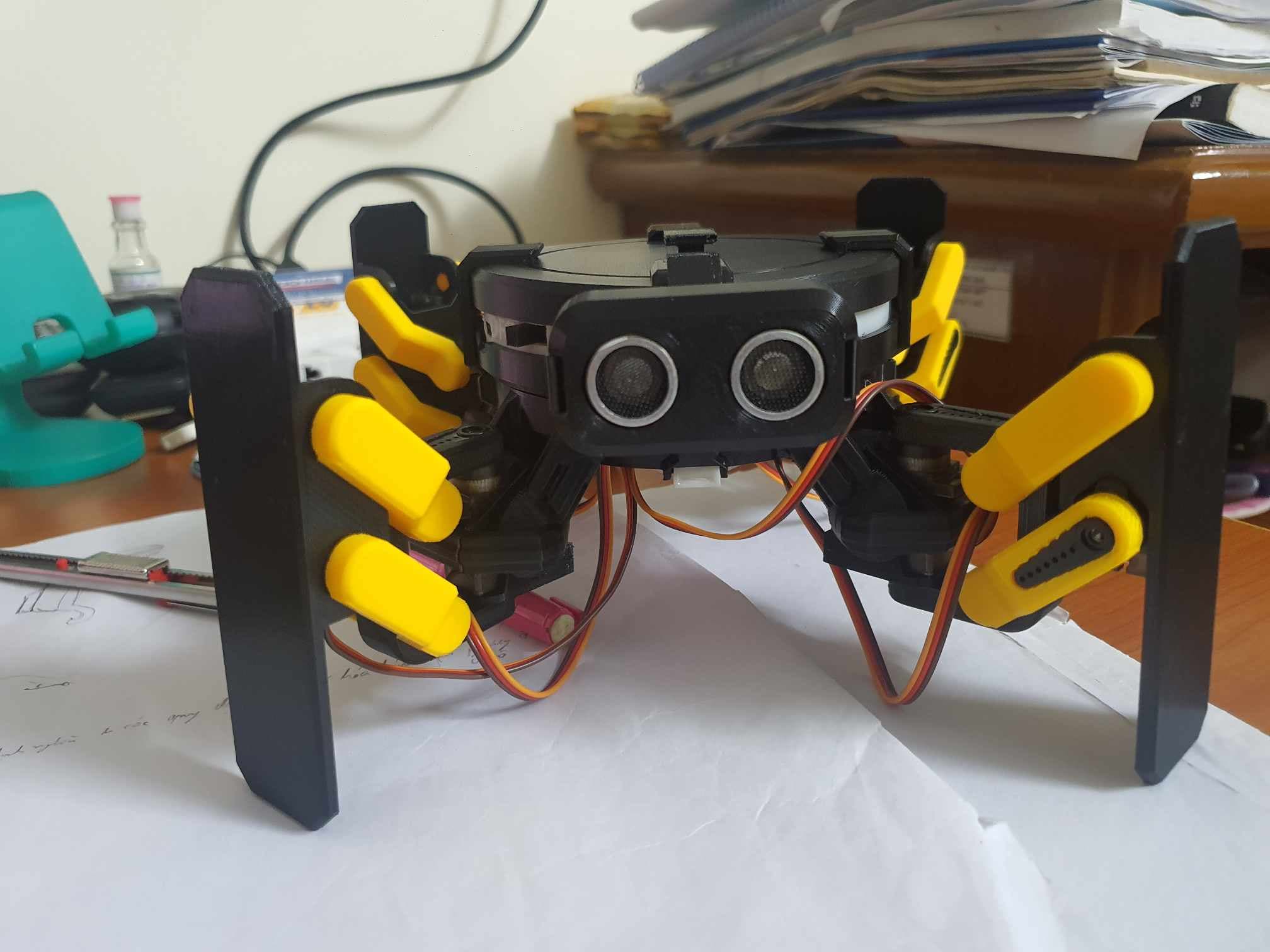
Before you start
A compatible model and the required display, inputs, sensors or actuators. Consult the model repository and instructor before adding parts.
This project brief accompanies an existing CYOBot demonstration. It explains how to plan an experiment; it is not a complete firmware tutorial or proof of a physically validated build for every model.
Use the documented example for your exact hardware as the baseline. Keep logic tests separate from physical tests, and record which results were simulated and which were observed on your robot. Private workspace lessons may provide additional instructions.
Try a small experiment
- Check the model and component compatibility in the official documentation.
- Identify the sensor and connector supported by your actual board. Test stationary readings and a conservative stop decision before planning any moving obstacle-avoidance demonstration.
- Keep a working baseline and change one requirement at a time.
- Record the code version, input, expected result, actual result and unresolved faults.
What to record
Document a small obstacle avoidance experiment with a clear requirement, observations and limitations.